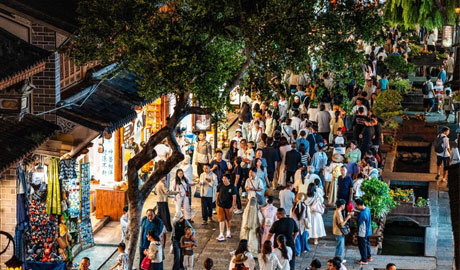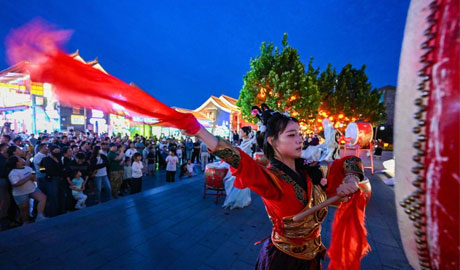


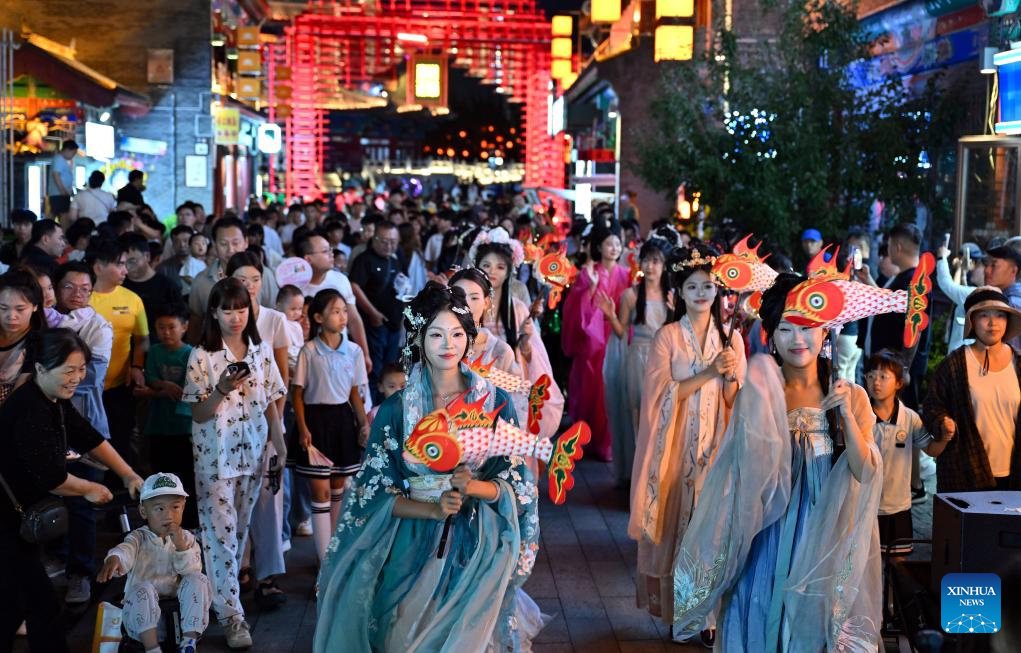
People watch a parade at the Nanchuan Old Street along the Cangzhou section of the Grand Canal in Cangzhou, north China's Hebei Province, June 5, 2026. Connecting Beijing, capital of China, and Hangzhou in east China's Zhejiang Province, the Grand Canal is the world's longest artificial waterway.
The 216-km Cangzhou section of the Grand Canal runs through the city. In recent years, Cangzhou has made efforts to build the Grand Canal cultural belt, promoting the integrated development of cultural and tourism industries. (Xinhua/Guo Cheng)
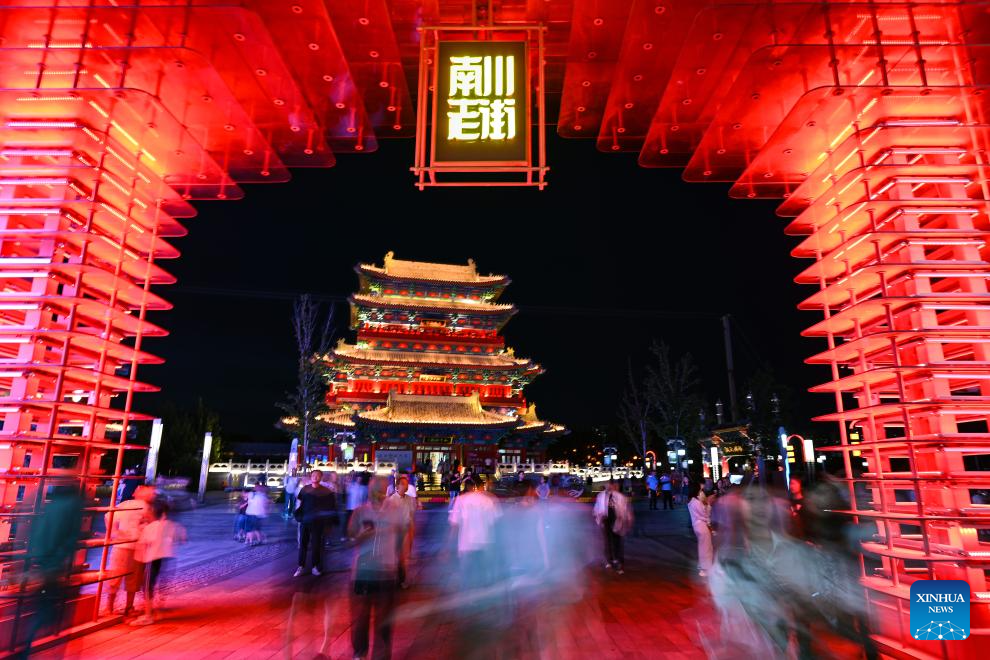
People visit the Nanchuan Old Street along the Cangzhou section of the Grand Canal in Cangzhou, north China's Hebei Province, June 5, 2026. Connecting Beijing, capital of China, and Hangzhou in east China's Zhejiang Province, the Grand Canal is the world's longest artificial waterway.
The 216-km Cangzhou section of the Grand Canal runs through the city. In recent years, Cangzhou has made efforts to build the Grand Canal cultural belt, promoting the integrated development of cultural and tourism industries. (Xinhua/Zhou Yi)
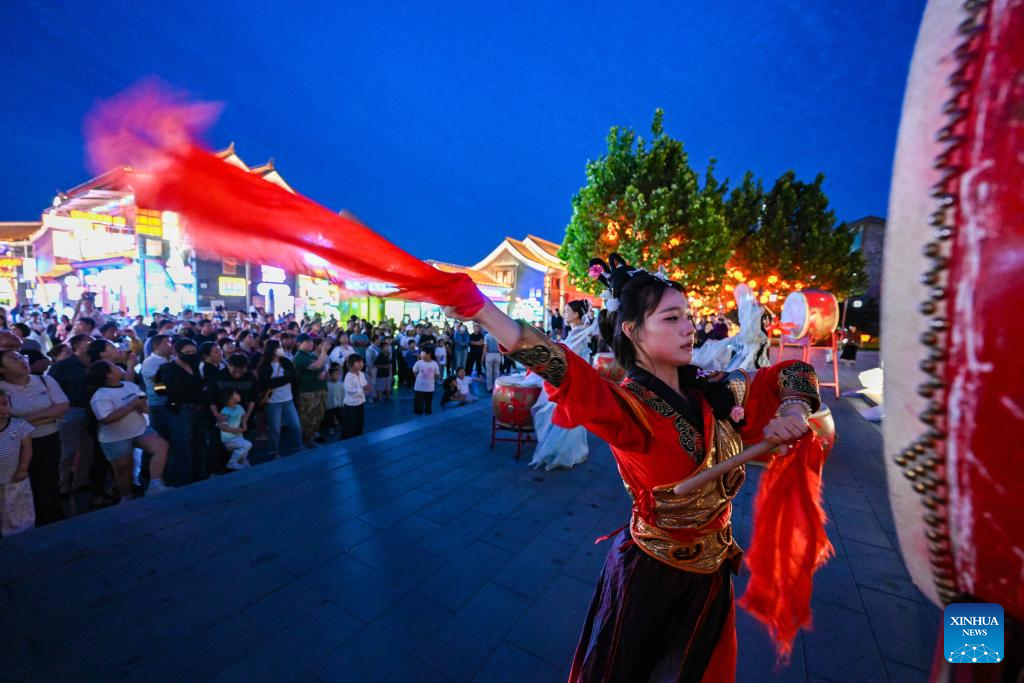
People watch a performance at the Nanchuan Old Street along the Cangzhou section of the Grand Canal in Cangzhou, north China's Hebei Province, June 5, 2026. Connecting Beijing, capital of China, and Hangzhou in east China's Zhejiang Province, the Grand Canal is the world's longest artificial waterway.
The 216-km Cangzhou section of the Grand Canal runs through the city. In recent years, Cangzhou has made efforts to build the Grand Canal cultural belt, promoting the integrated development of cultural and tourism industries. (Xinhua/Zhou Yi)
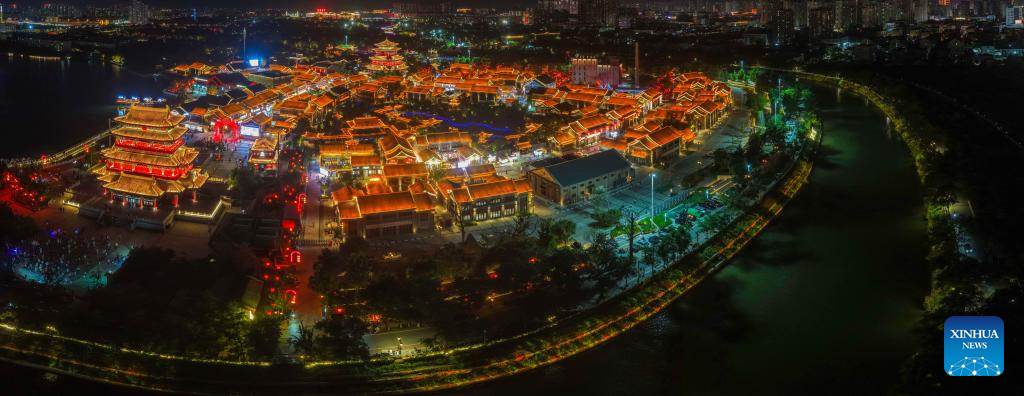
An aerial drone photo taken on June 5, 2026 shows the Nanchuan Old Street along the Cangzhou section of the Grand Canal in Cangzhou City, north China's Hebei Province. Connecting Beijing, capital of China, and Hangzhou in east China's Zhejiang Province, the Grand Canal is the world's longest artificial waterway.
The 216-km Cangzhou section of the Grand Canal runs through the city. In recent years, Cangzhou has made efforts to build the Grand Canal cultural belt, promoting the integrated development of cultural and tourism industries. (Xinhua/Jiang Fan)
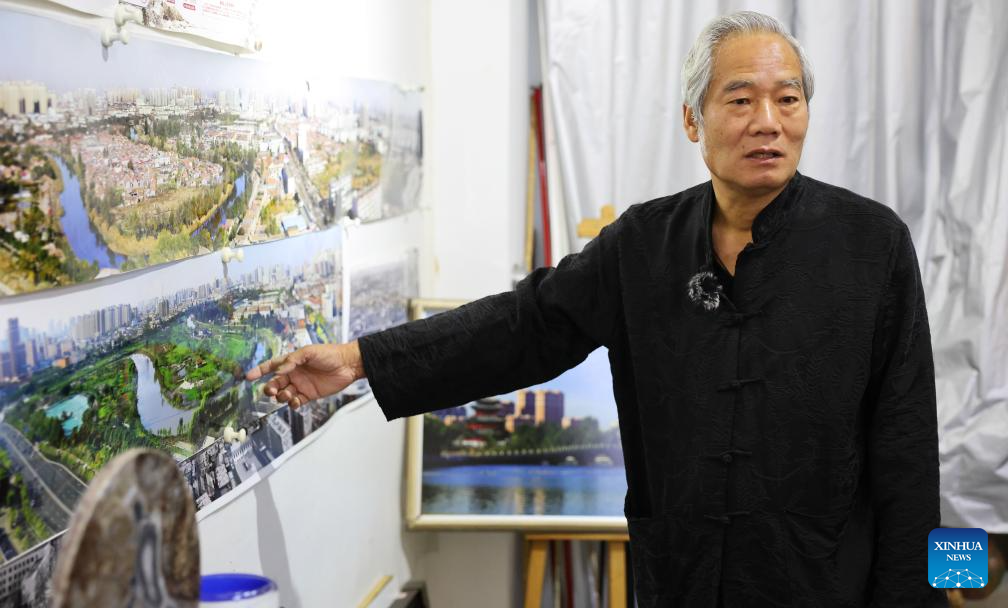
Photography enthusiast Zong Zengshun introduces his photos of the Cangzhou section of the Grand Canal in Cangzhou, north China's Hebei Province. He has been photographing the Cangzhou section of the Grand Canal for nearly four decades. Connecting Beijing, capital of China, and Hangzhou in east China's Zhejiang Province, the Grand Canal is the world's longest artificial waterway.
The 216-km Cangzhou section of the Grand Canal runs through the city. In recent years, Cangzhou has made efforts to build the Grand Canal cultural belt, promoting the integrated development of cultural and tourism industries. (Xinhua/Han He)
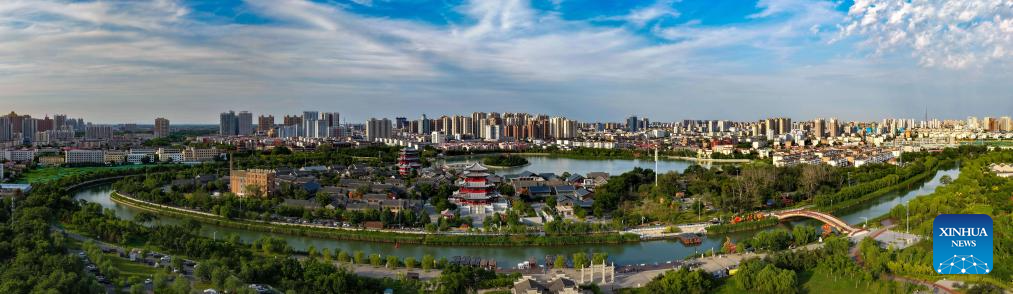
This stitched aerial photo taken on June 5, 2026 shows the Cangzhou section of the Grand Canal in Cangzhou, north China's Hebei Province. Connecting Beijing, capital of China, and Hangzhou in east China's Zhejiang Province, the Grand Canal is the world's longest artificial waterway.
The 216-km Cangzhou section of the Grand Canal runs through the city. In recent years, Cangzhou has made efforts to build the Grand Canal cultural belt, promoting the integrated development of cultural and tourism industries. (Xinhua/Jiang Fan)
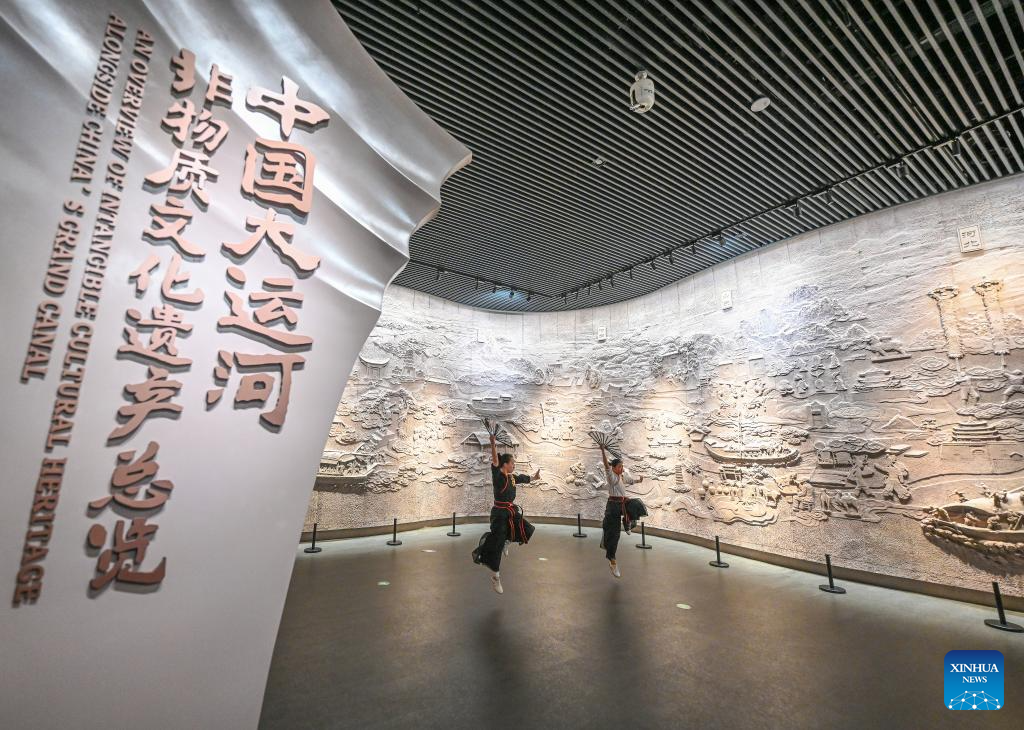
This photo taken on June 6, 2026 show a martial arts performance at an exhibition hall on intangible cultural heritage alongside China's Grand Canal, in Cangzhou, north China's Hebei Province. Connecting Beijing, capital of China, and Hangzhou in east China's Zhejiang Province, the Grand Canal is the world's longest artificial waterway.
The 216-km Cangzhou section of the Grand Canal runs through the city. In recent years, Cangzhou has made efforts to build the Grand Canal cultural belt, promoting the integrated development of cultural and tourism industries. (Xinhua/Zhou Yi)
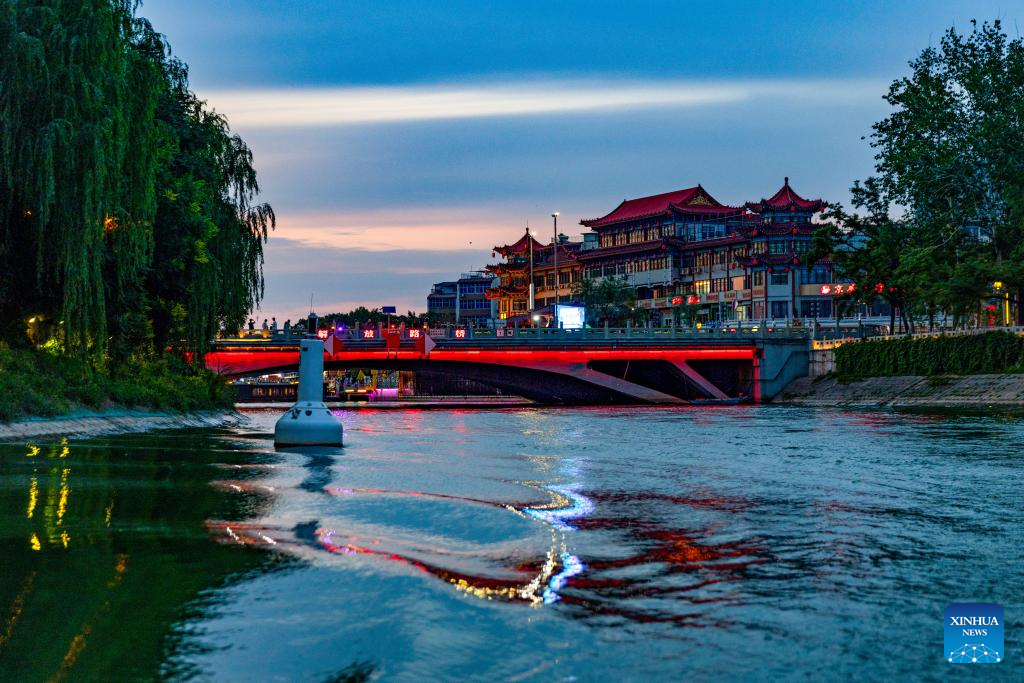
This photo taken on June 5, 2026 shows a partial view of the Cangzhou section of the Grand Canal in Cangzhou, north China's Hebei Province. Connecting Beijing, capital of China, and Hangzhou in east China's Zhejiang Province, the Grand Canal is the world's longest artificial waterway.
The 216-km Cangzhou section of the Grand Canal runs through the city. In recent years, Cangzhou has made efforts to build the Grand Canal cultural belt, promoting the integrated development of cultural and tourism industries. (Xinhua/Jiang Fan)
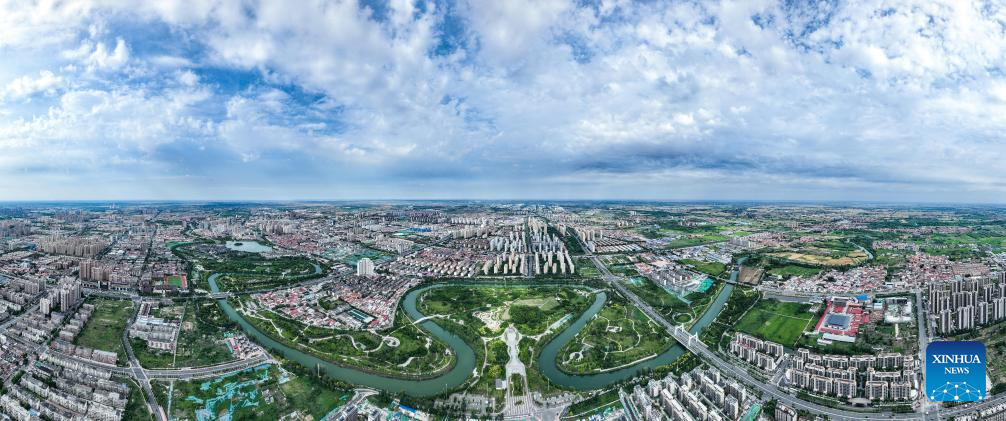
This stitched aerial photo taken on June 5, 2026 shows the Cangzhou section of the Grand Canal in Cangzhou, north China's Hebei Province. Connecting Beijing, capital of China, and Hangzhou in east China's Zhejiang Province, the Grand Canal is the world's longest artificial waterway.
The 216-km Cangzhou section of the Grand Canal runs through the city. In recent years, Cangzhou has made efforts to build the Grand Canal cultural belt, promoting the integrated development of cultural and tourism industries. (Xinhua/Zhou Yi)
点击右上角 微信好友
微信好友
 朋友圈
朋友圈

请使用浏览器分享功能进行分享