

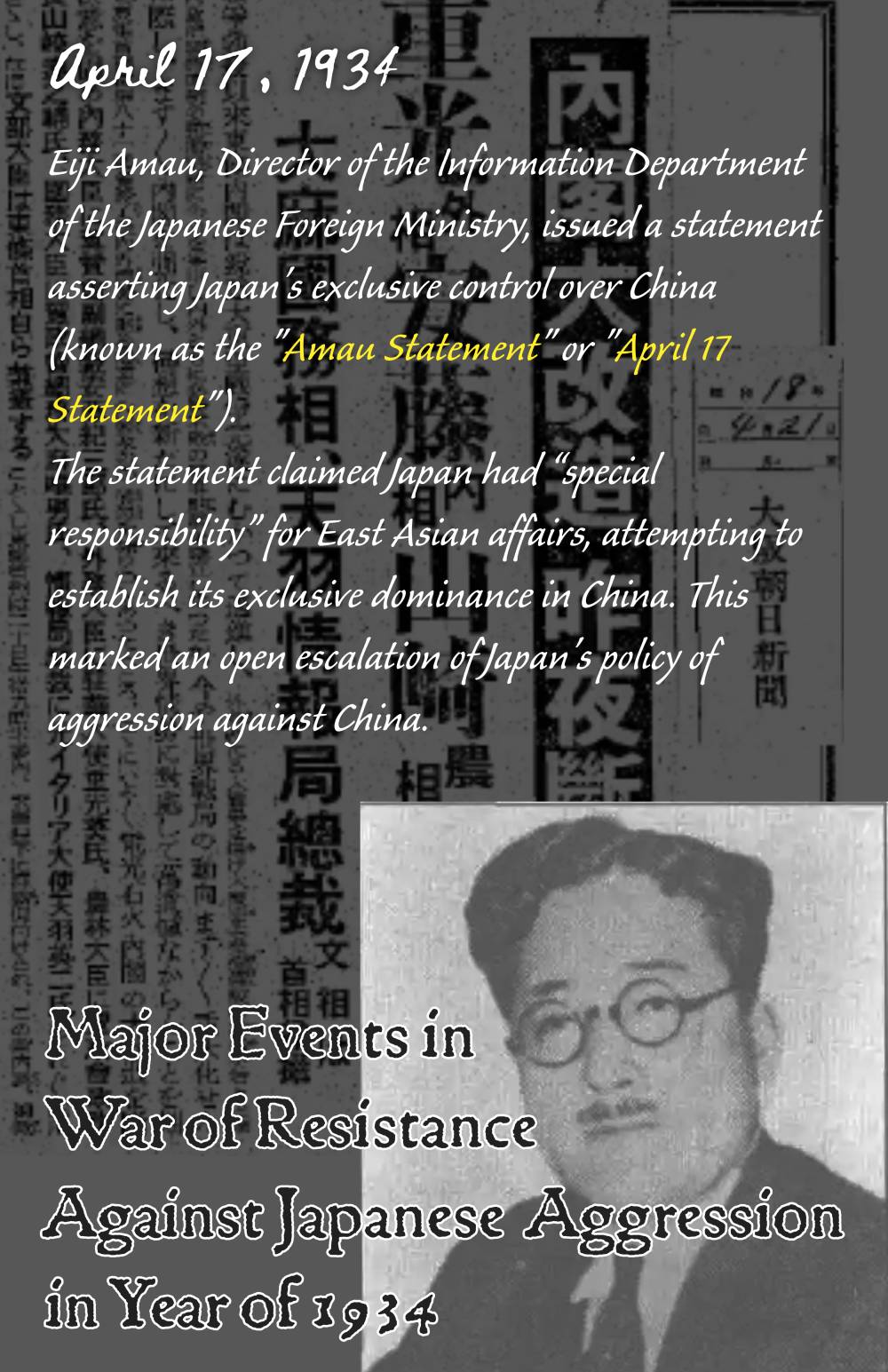
On April 17, 1934, Eiji Amau, Director of the Information Department of the Japanese Foreign Ministry, issued a statement asserting Japan's exclusive control over China (known as the "Amau Statement" or "April 17 Statement").
The statement claimed Japan had “special responsibility” for East Asian affairs, attempting to establish its exclusive dominance in China. This marked an open escalation of Japan's policy of aggression against China.
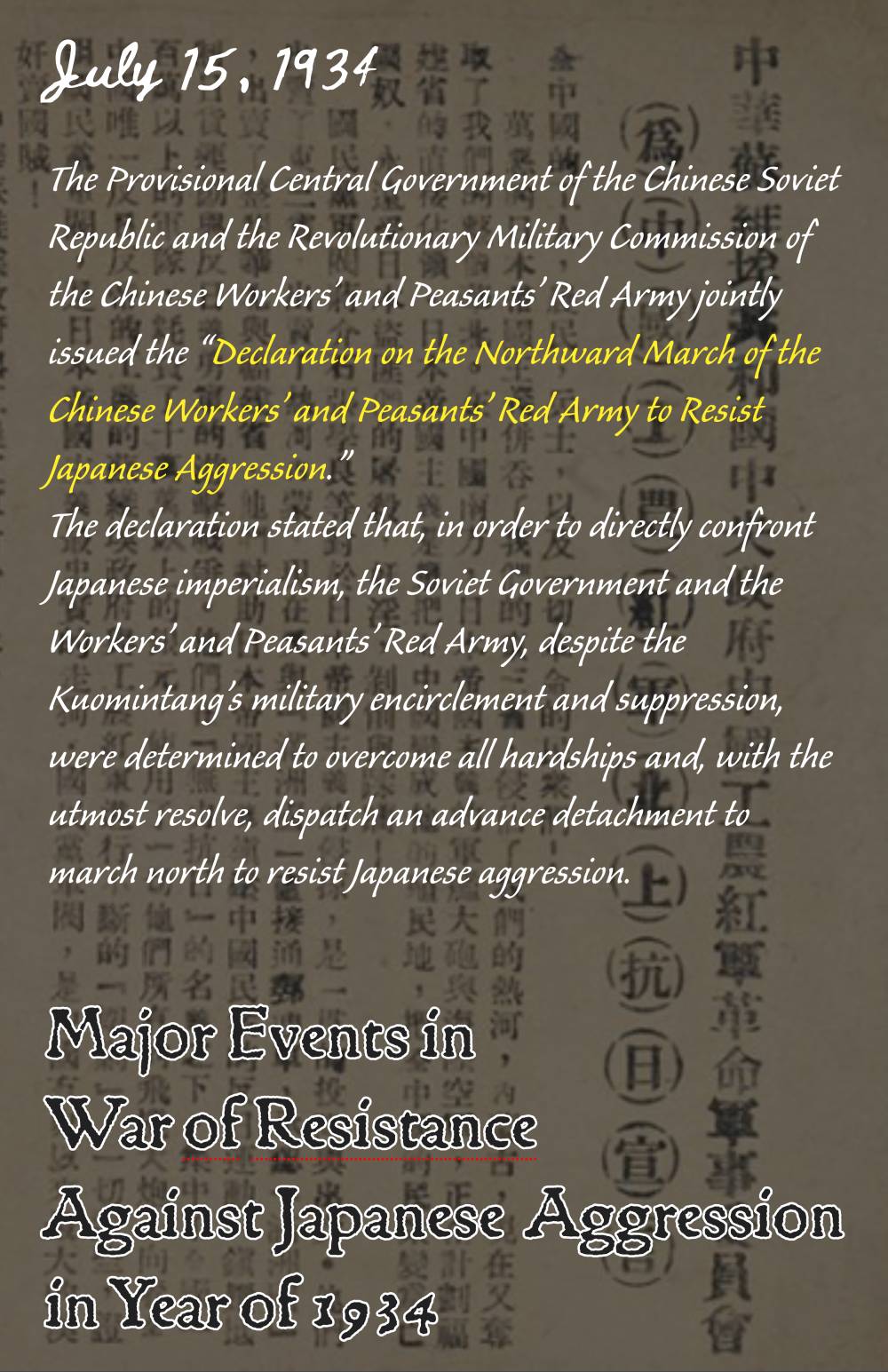
On July 15, 1934, the Provisional Central Government of the Chinese Soviet Republic and the Revolutionary Military Commission of the Chinese Workers’ and Peasants’ Red Army jointly issued the “Declaration on the Northward March of the Chinese Workers’ and Peasants’ Red Army to Resist Japanese Aggression.”
The declaration stated that, in order to directly confront Japanese imperialism, the Soviet Government and the Workers’ and Peasants’ Red Army, despite the Kuomintang’s military encirclement and suppression, were determined to overcome all hardships and, with the utmost resolve, dispatch an advance detachment to march north to resist Japanese aggression.

Asia-Pacific Community: Chinese Culture Day brings China closer to Australian students

Jingmai Mountain in China's Yunnan draws tourists with tea culture

2026 Int'l Youth Band China Tour (Shenzhen) kicks off in Guangdong

Morning scenery of Wuling Mountain National Nature Reserve in N China's Hebei

Villagers dry agricultural products in Wuyuan County, China's Jiangxi
点击右上角 微信好友
微信好友
 朋友圈
朋友圈

请使用浏览器分享功能进行分享