


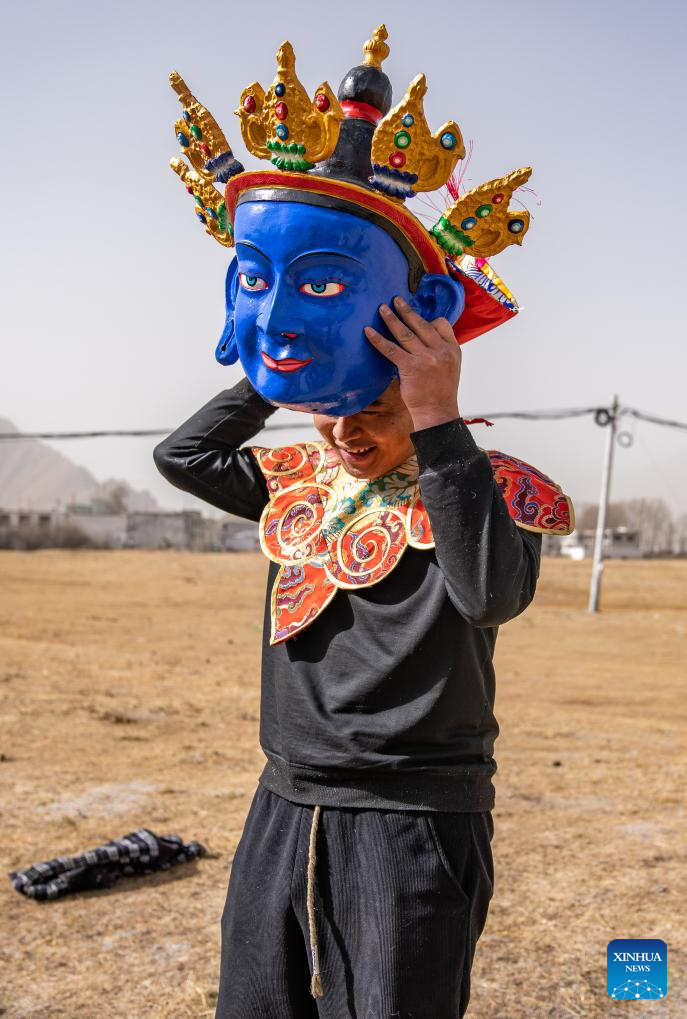
A craftsman checks a traditional Tibetan mask in Dagze District of Lhasa, southwest China's Xizang Autonomous Region, Dec. 9, 2024. Shilok is an inheritor of a traditional Tibetan mask making technique, a regional intangible cultural heritage with time-consuming procedures including sculpting, layering, air-drying, and painting.
In 2012, Shilok set up a cooperative for making Tibetan opera masks with the help of the local government and started to work here with his apprentices. "Most of our orders are from Tibetan opera troupes," Shilok said.
In recent years, the cooperative has provided a space for local people to learn mask-making skills, created employment opportunities, and contributed to the protection and development of intangible cultural heritages. (Xinhua/Tenzin Nyida)
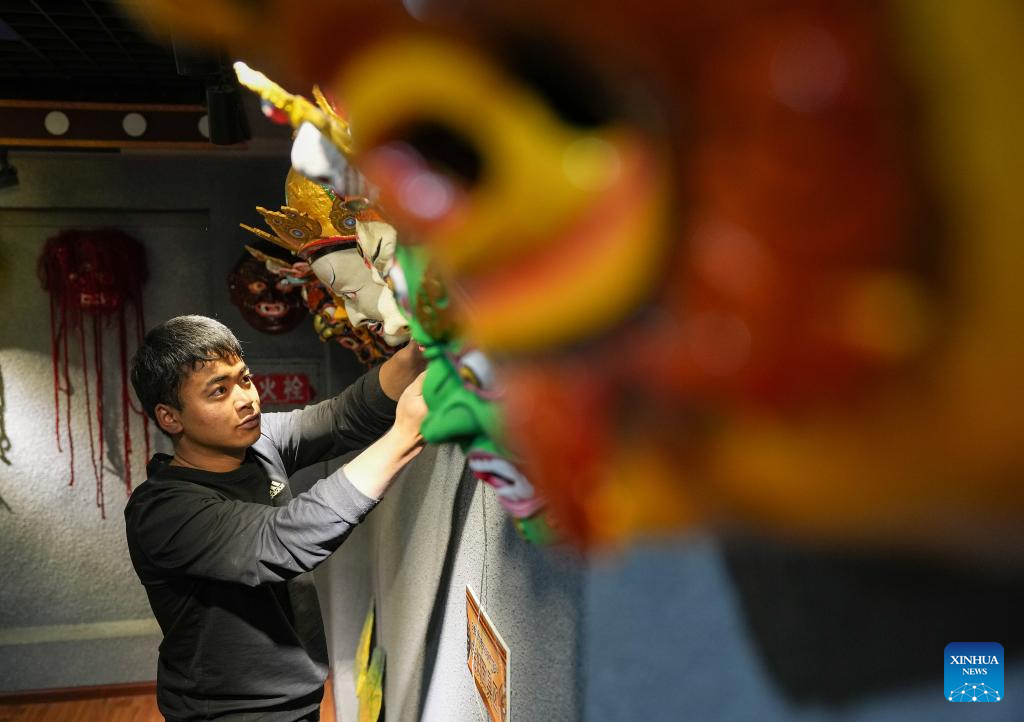
A craftsman looks at traditional Tibetan masks at a cooperative in Dagze District of Lhasa, southwest China's Xizang Autonomous Region, Dec. 9, 2024. Shilok is an inheritor of a traditional Tibetan mask making technique, a regional intangible cultural heritage with time-consuming procedures including sculpting, layering, air-drying, and painting.
In 2012, Shilok set up a cooperative for making Tibetan opera masks with the help of the local government and started to work here with his apprentices. "Most of our orders are from Tibetan opera troupes," Shilok said.
In recent years, the cooperative has provided a space for local people to learn mask-making skills, created employment opportunities, and contributed to the protection and development of intangible cultural heritages. (Xinhua/Ding Ting)
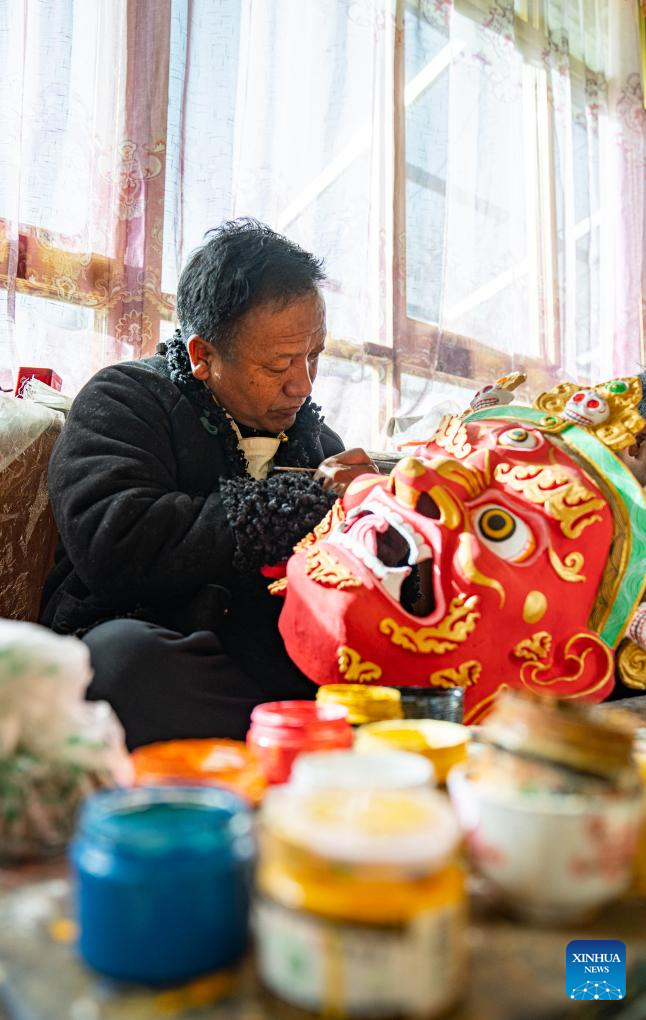
Shilok crafts a traditional Tibetan mask at a cooperative in Dagze District of Lhasa, southwest China's Xizang Autonomous Region, Dec. 9, 2024. Shilok is an inheritor of a traditional Tibetan mask making technique, a regional intangible cultural heritage with time-consuming procedures including sculpting, layering, air-drying, and painting.
In 2012, Shilok set up a cooperative for making Tibetan opera masks with the help of the local government and started to work here with his apprentices. "Most of our orders are from Tibetan opera troupes," Shilok said.
In recent years, the cooperative has provided a space for local people to learn mask-making skills, created employment opportunities, and contributed to the protection and development of intangible cultural heritages. (Xinhua/Tenzin Nyida)
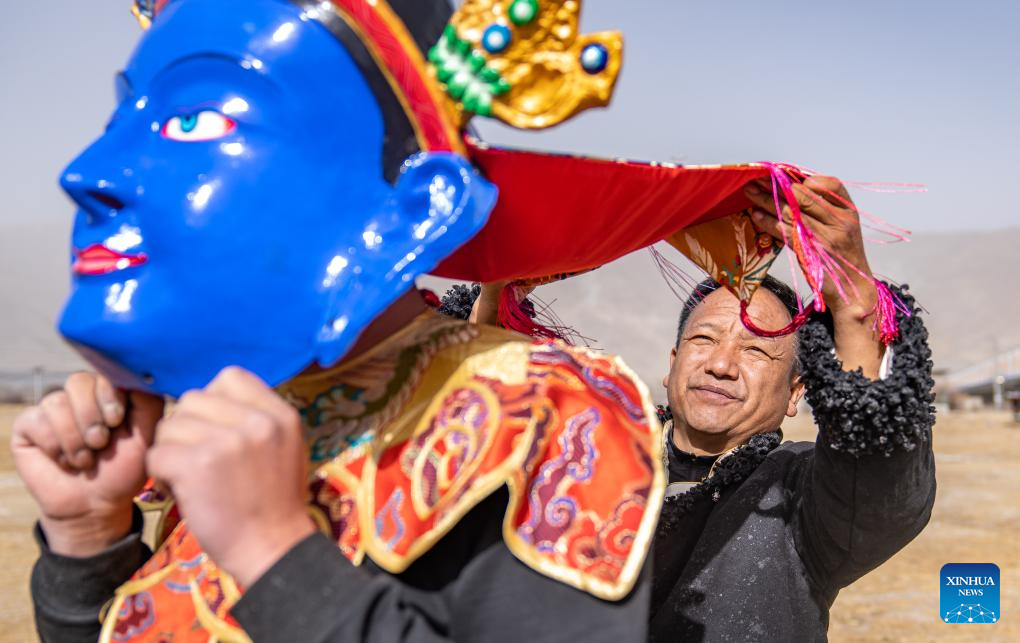
Shilok (R) and his colleague check a traditional Tibetan mask in Dagze District of Lhasa, southwest China's Xizang Autonomous Region, Dec. 9, 2024. Shilok is an inheritor of a traditional Tibetan mask making technique, a regional intangible cultural heritage with time-consuming procedures including sculpting, layering, air-drying, and painting.
In 2012, Shilok set up a cooperative for making Tibetan opera masks with the help of the local government and started to work here with his apprentices. "Most of our orders are from Tibetan opera troupes," Shilok said.
In recent years, the cooperative has provided a space for local people to learn mask-making skills, created employment opportunities, and contributed to the protection and development of intangible cultural heritages. (Xinhua/Tenzin Nyida)
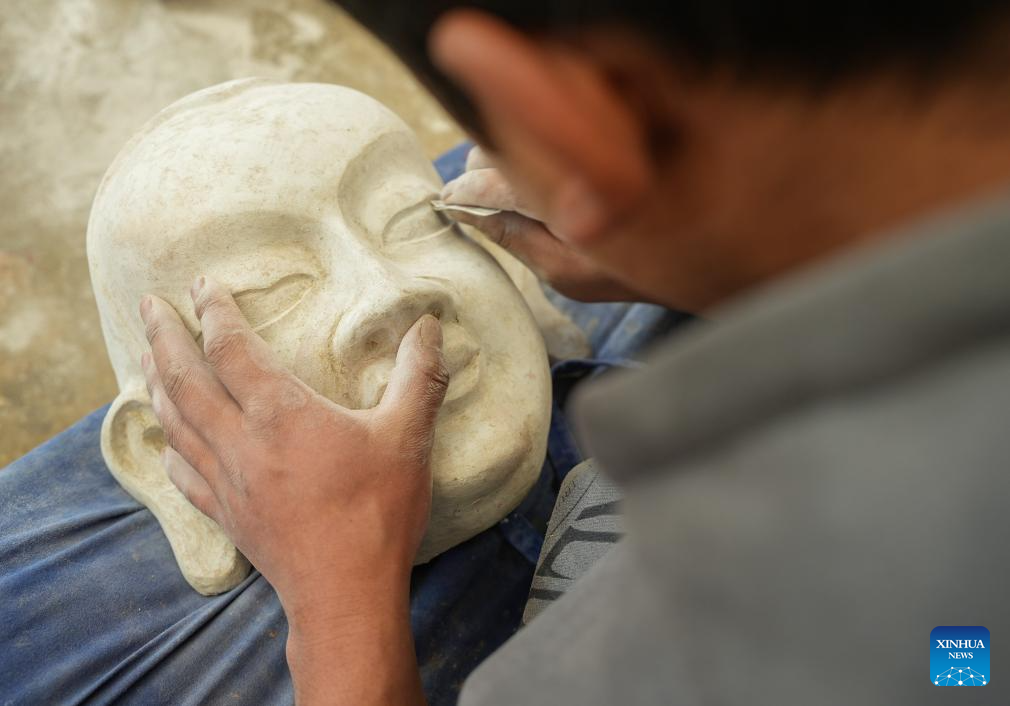
A craftsman makes a traditional Tibetan mask at a cooperative in Dagze District of Lhasa, southwest China's Xizang Autonomous Region, Dec. 9, 2024. Shilok is an inheritor of a traditional Tibetan mask making technique, a regional intangible cultural heritage with time-consuming procedures including sculpting, layering, air-drying, and painting.
In 2012, Shilok set up a cooperative for making Tibetan opera masks with the help of the local government and started to work here with his apprentices. "Most of our orders are from Tibetan opera troupes," Shilok said.
In recent years, the cooperative has provided a space for local people to learn mask-making skills, created employment opportunities, and contributed to the protection and development of intangible cultural heritages. (Xinhua/Ding Ting)
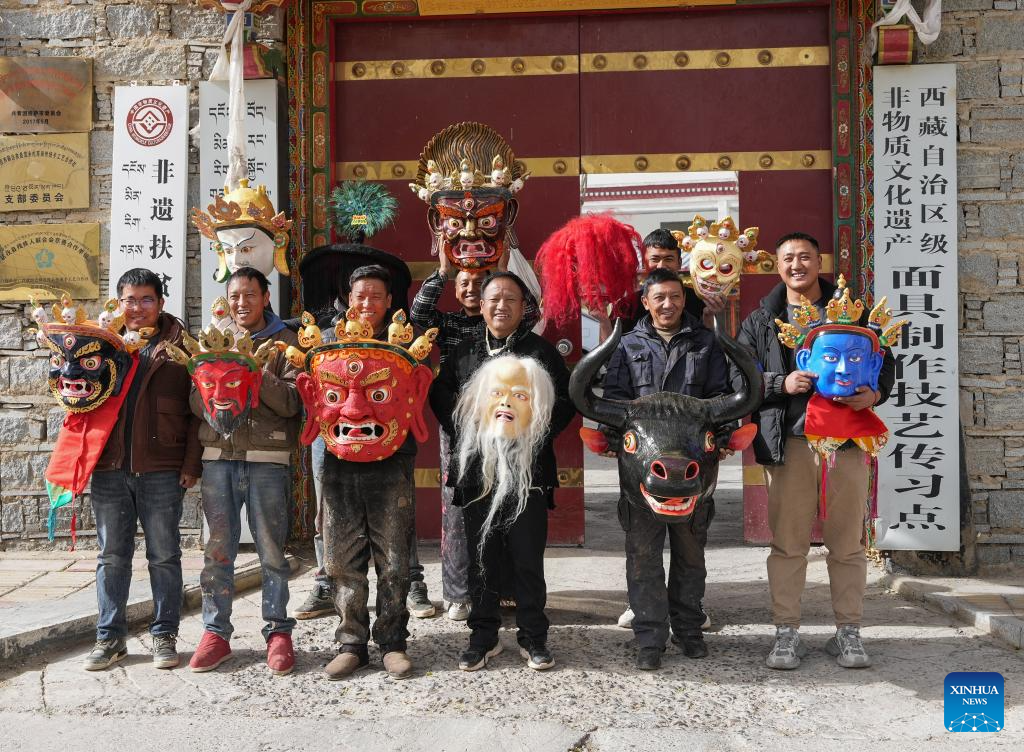
Craftsmen pose for a group photo in front of a cooperative in Dagze District of Lhasa, southwest China's Xizang Autonomous Region, Dec. 9, 2024.
Shilok is an inheritor of a traditional Tibetan mask making technique, a regional intangible cultural heritage with time-consuming procedures including sculpting, layering, air-drying, and painting.
In 2012, Shilok set up a cooperative for making Tibetan opera masks with the help of the local government and started to work here with his apprentices. "Most of our orders are from Tibetan opera troupes," Shilok said.
In recent years, the cooperative has provided a space for local people to learn mask-making skills, created employment opportunities, and contributed to the protection and development of intangible cultural heritages. (Xinhua/Jigme Dorje)
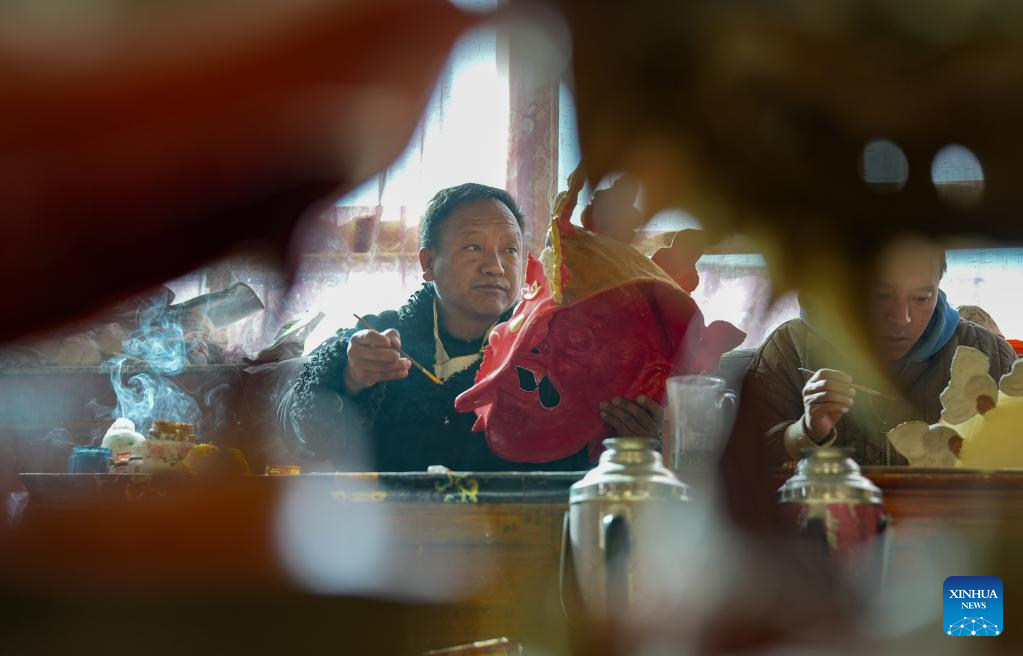
Shilok crafts a traditional Tibetan mask at a cooperative in Dagze District of Lhasa, southwest China's Xizang Autonomous Region, Dec. 9, 2024. Shilok is an inheritor of a traditional Tibetan mask making technique, a regional intangible cultural heritage with time-consuming procedures including sculpting, layering, air-drying, and painting.
In 2012, Shilok set up a cooperative for making Tibetan opera masks with the help of the local government and started to work here with his apprentices. "Most of our orders are from Tibetan opera troupes," Shilok said.
In recent years, the cooperative has provided a space for local people to learn mask-making skills, created employment opportunities, and contributed to the protection and development of intangible cultural heritages. (Xinhua/Jigme Dorje)
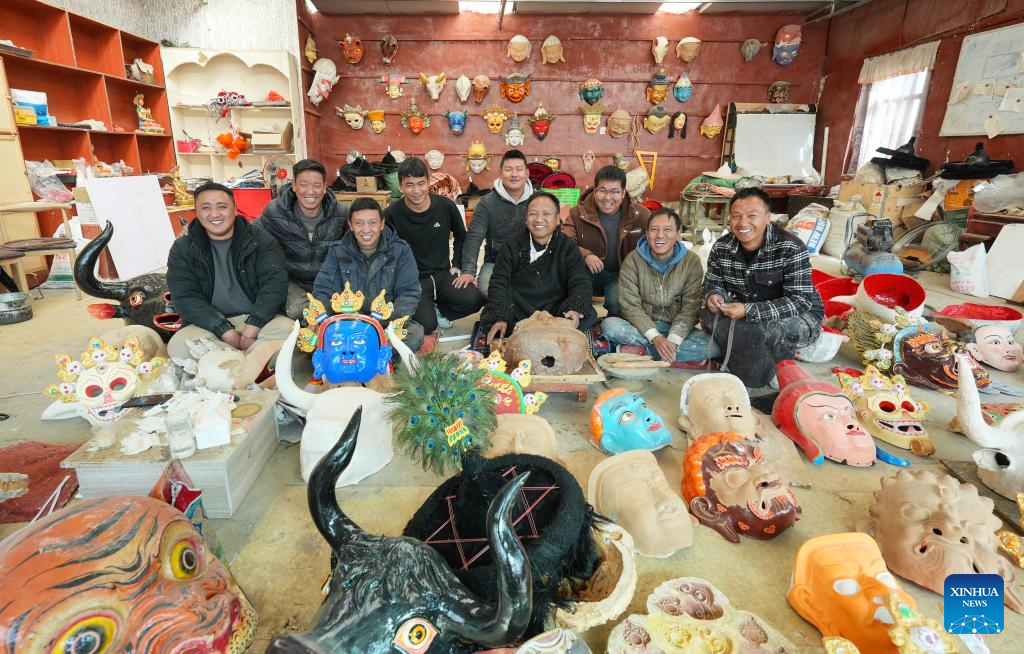
Craftsmen pose for a group photo at a workshop of a cooperative in Dagze District of Lhasa, southwest China's Xizang Autonomous Region, Dec. 9, 2024. Shilok is an inheritor of a traditional Tibetan mask making technique, a regional intangible cultural heritage with time-consuming procedures including sculpting, layering, air-drying, and painting.
In 2012, Shilok set up a cooperative for making Tibetan opera masks with the help of the local government and started to work here with his apprentices. "Most of our orders are from Tibetan opera troupes," Shilok said.
In recent years, the cooperative has provided a space for local people to learn mask-making skills, created employment opportunities, and contributed to the protection and development of intangible cultural heritages. (Xinhua/Ding Ting)
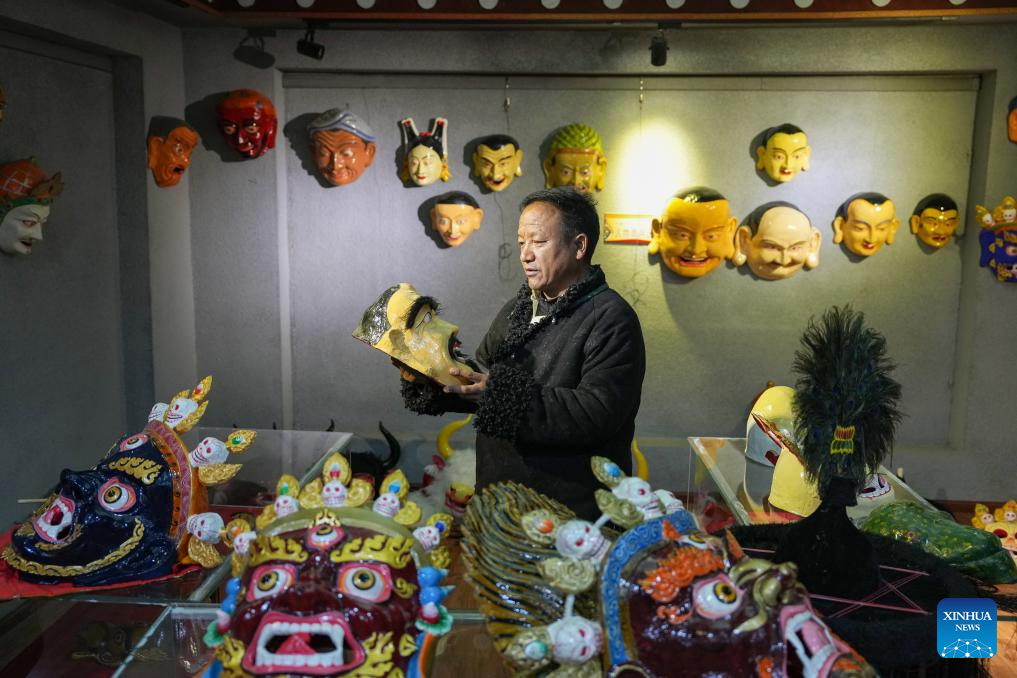
Shilok looks at a traditional Tibetan mask at an exhibition hall of a cooperative in Dagze District of Lhasa, southwest China's Xizang Autonomous Region, Dec. 9, 2024. Shilok is an inheritor of a traditional Tibetan mask making technique, a regional intangible cultural heritage with time-consuming procedures including sculpting, layering, air-drying, and painting.
In 2012, Shilok set up a cooperative for making Tibetan opera masks with the help of the local government and started to work here with his apprentices. "Most of our orders are from Tibetan opera troupes," Shilok said.
In recent years, the cooperative has provided a space for local people to learn mask-making skills, created employment opportunities, and contributed to the protection and development of intangible cultural heritages. (Xinhua/Ding Ting)
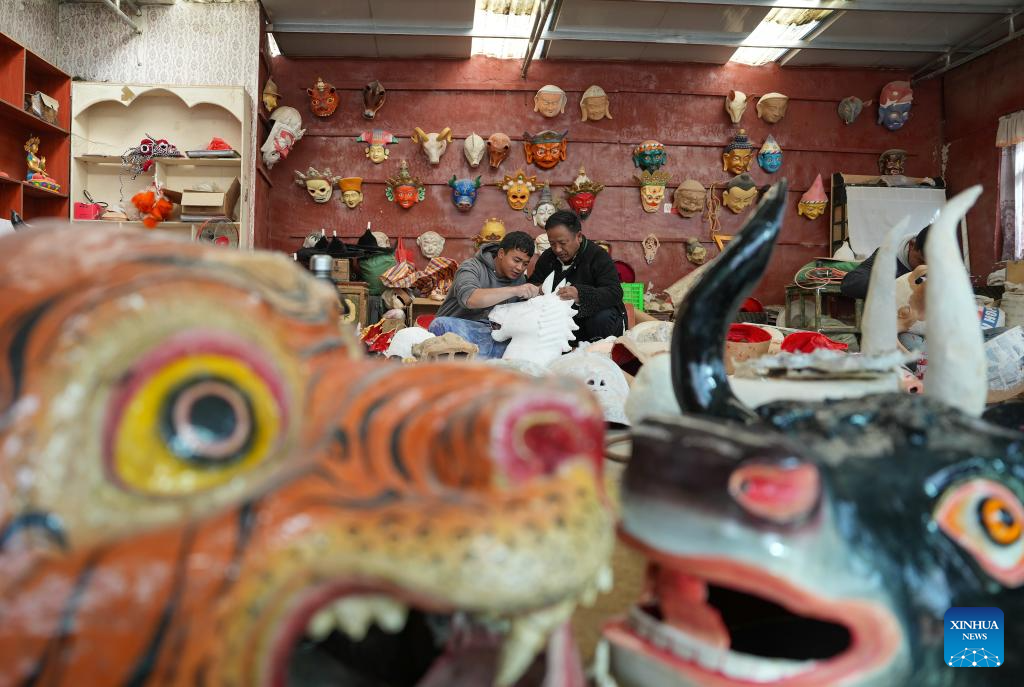
Shilok (R) and his colleague talk about traditional Tibetan mask-making experience in Lhasa, southwest China's Xizang Autonomous Region, Dec. 9, 2024. Shilok is an inheritor of a traditional Tibetan mask making technique, a regional intangible cultural heritage with time-consuming procedures including sculpting, layering, air-drying, and painting.
In 2012, Shilok set up a cooperative for making Tibetan opera masks with the help of the local government and started to work here with his apprentices. "Most of our orders are from Tibetan opera troupes," Shilok said.
In recent years, the cooperative has provided a space for local people to learn mask-making skills, created employment opportunities, and contributed to the protection and development of intangible cultural heritages. (Xinhua/Ding Ting)
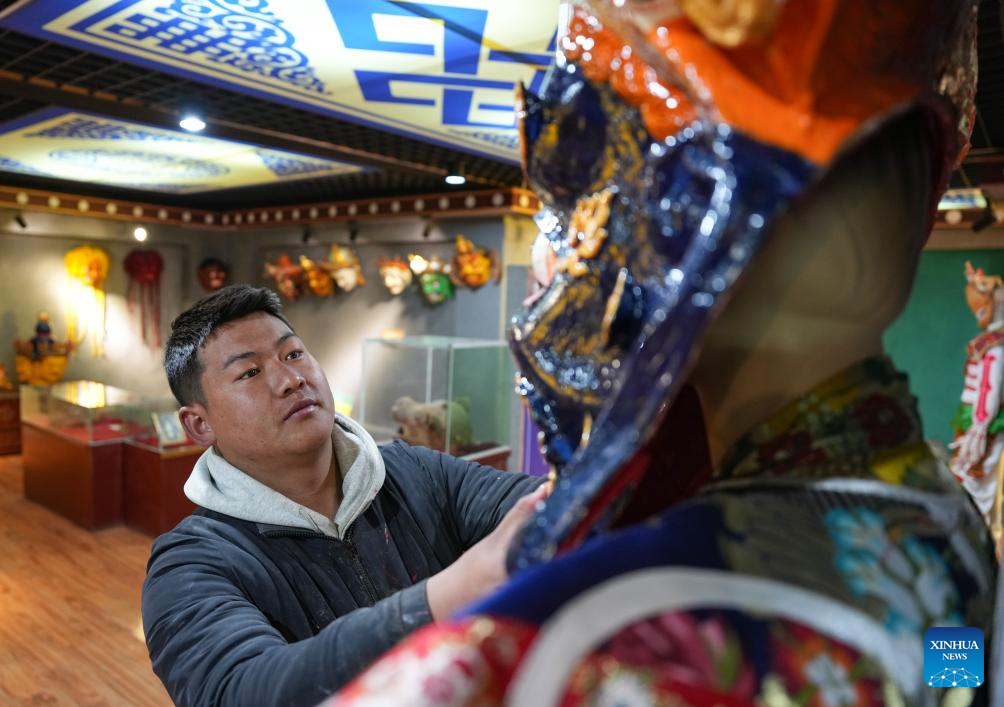
A craftsman looks at traditional Tibetan masks at a cooperative in Dagze District of Lhasa, southwest China's Xizang Autonomous Region, Dec. 9, 2024. Shilok is an inheritor of a traditional Tibetan mask making technique, a regional intangible cultural heritage with time-consuming procedures including sculpting, layering, air-drying, and painting.
In 2012, Shilok set up a cooperative for making Tibetan opera masks with the help of the local government and started to work here with his apprentices. "Most of our orders are from Tibetan opera troupes," Shilok said.
In recent years, the cooperative has provided a space for local people to learn mask-making skills, created employment opportunities, and contributed to the protection and development of intangible cultural heritages. (Xinhua/Ding Ting)
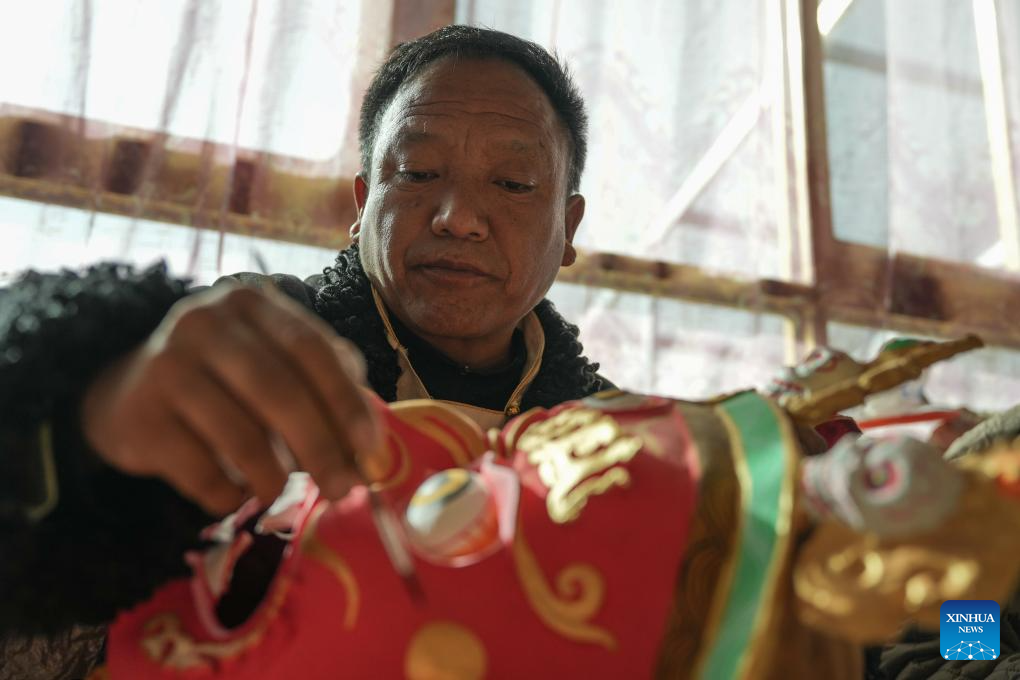
Shilok crafts a traditional Tibetan mask at a cooperative in Dagze District of Lhasa, southwest China's Xizang Autonomous Region, Dec. 9, 2024. Shilok is an inheritor of a traditional Tibetan mask making technique, a regional intangible cultural heritage with time-consuming procedures including sculpting, layering, air-drying, and painting.
In 2012, Shilok set up a cooperative for making Tibetan opera masks with the help of the local government and started to work here with his apprentices. "Most of our orders are from Tibetan opera troupes," Shilok said.
In recent years, the cooperative has provided a space for local people to learn mask-making skills, created employment opportunities, and contributed to the protection and development of intangible cultural heritages. (Xinhua/Jigme Dorje)
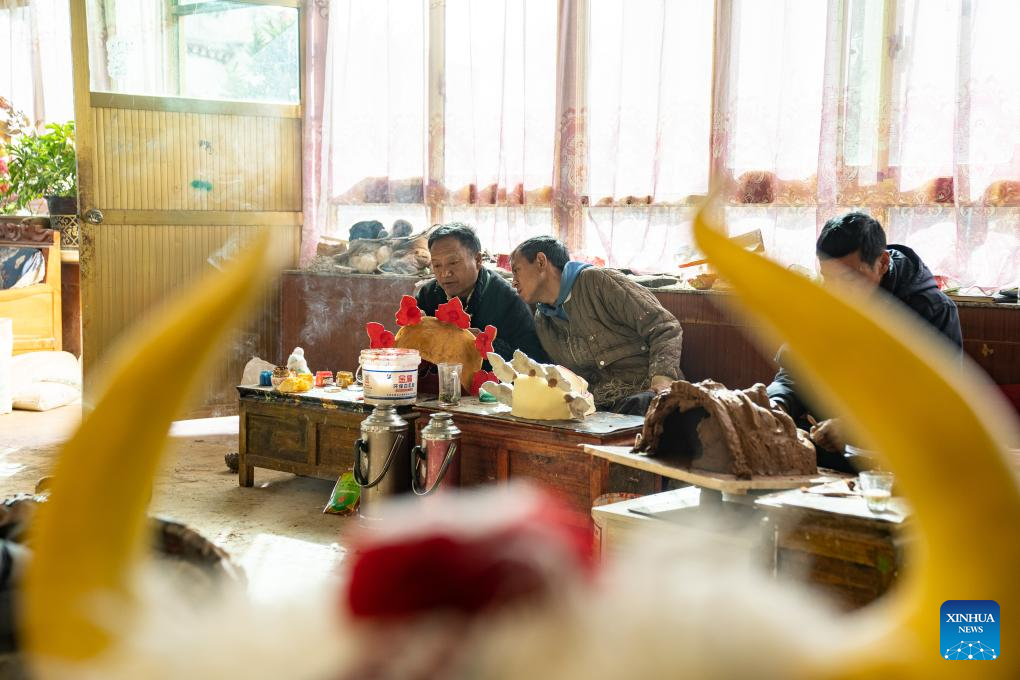
Shilok (1st L) and his colleague talk about traditional Tibetan mask-making experience in Lhasa, southwest China's Xizang Autonomous Region, Dec. 9, 2024. Shilok is an inheritor of a traditional Tibetan mask making technique, a regional intangible cultural heritage with time-consuming procedures including sculpting, layering, air-drying, and painting.
In 2012, Shilok set up a cooperative for making Tibetan opera masks with the help of the local government and started to work here with his apprentices. "Most of our orders are from Tibetan opera troupes," Shilok said.
In recent years, the cooperative has provided a space for local people to learn mask-making skills, created employment opportunities, and contributed to the protection and development of intangible cultural heritages. (Xinhua/Tenzin Nyida)
点击右上角 微信好友
微信好友
 朋友圈
朋友圈

请使用浏览器分享功能进行分享