


Indian socio-political scholar Sudheendra Kulkarni recently shared profound insights into China's innovative methods for poverty reduction and rural revitalization in an exclusive interview with Guangming Online. Reflecting on his month-and-a-half-long exploration of rural China, Kulkarni highlighted China's remarkable success in eradicating extreme poverty in the past decade.
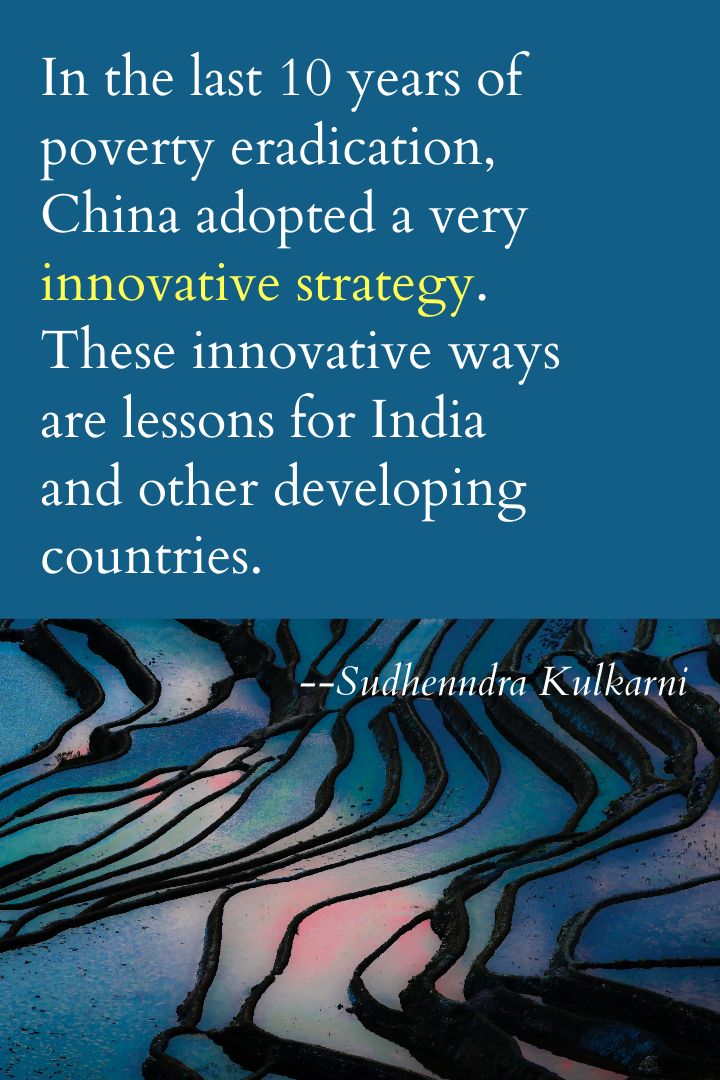
“In the last 10 years of poverty eradication, China adopted a very innovative strategy,” Kulkarni said, “These innovative ways are lessons for India and other developing countries.”
He emphasized China's inventive approach, citing increased agricultural production, rural industrialization, and the promotion of rural tourism as effective strategies. He illustrated these methods with examples, such as the transformation of Wenfeng Village near Chongqing, showcasing collaborative efforts between the government, local cooperatives, and enterprises.
A key aspect of China's success, as per Kulkarni, lies in the integration of industry and agriculture through rural industrialization. He pointed to a Sichuan Province village where industrializing avocado cultivation boosted local livelihoods, thanks to scientific methods and collaborations like Alibaba's efficient supply chain to major markets.
Kulkarni's observations underscore the potential of the innovative methods adopted by China in poverty alleviation and rural revitalization. He believes that China's innovative path has not only achieved substantial success but also offers valuable insights for global development.


Hefei in China's Anhui blends heritage of old city with modern vitality to advance urban renewal

Flower-themed scenic areas drive rural tourism in Chongqing's village

China's Kuqa City attracts visitors to experience living history

Tea farmers harvest West Lake Longjing tea in China's Hangzhou

Ancient bronze treasures from southwest China showcased in Spain
点击右上角 微信好友
微信好友
 朋友圈
朋友圈

请使用浏览器分享功能进行分享