


(Photo provided to Guangming Online)
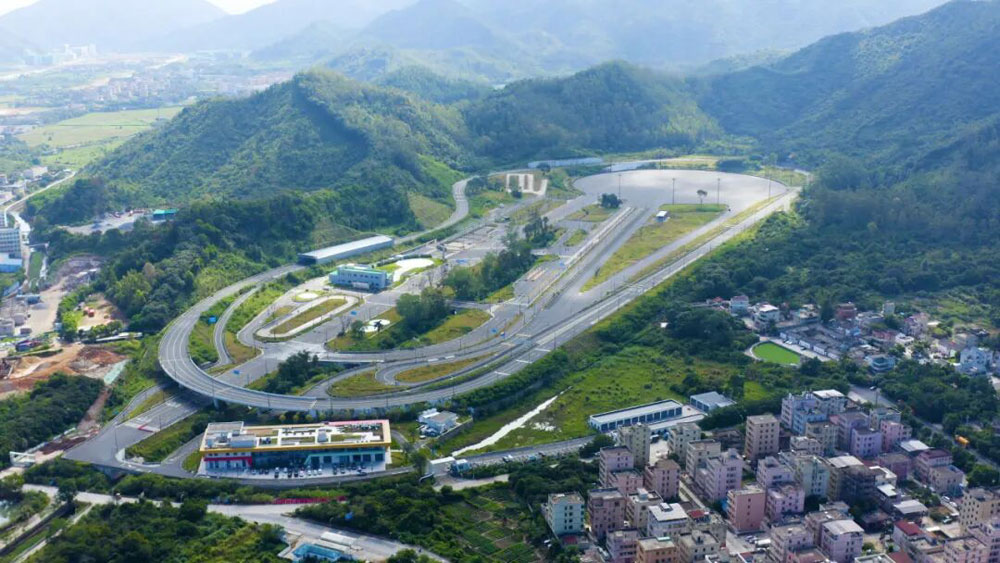
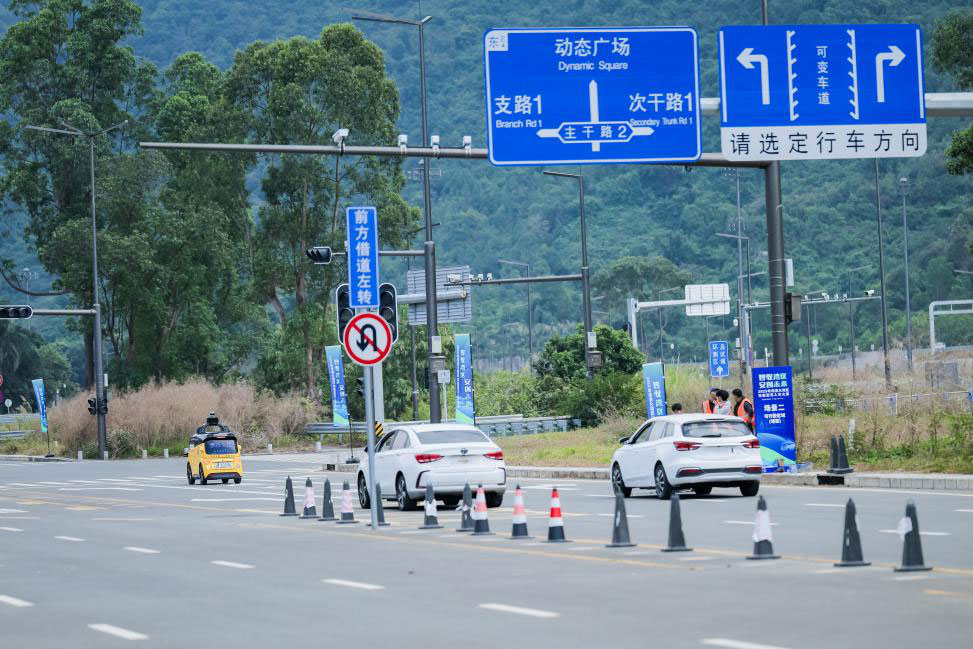
At the Greater Bay Area Smart-Connected Vehicle Proving Ground in Pingshan District, Shenzhen, Guangdong Province, a test vehicle operated by DeepRoute.ai was moving at a steady speed toward an obstacle about 100 meters ahead. Two white antennas on the roof were flashing, while the steering wheel inside the cabin turned on its own. A closer look revealed that the wheel was being controlled by a robotic driving device mounted onto it.
“Mechanical control allows us to ensure much greater precision in vehicle operation,” a tester from CATARC Technology explained. The system can control speed with accuracy down to 0.01 seconds, while acceleration and braking are also handled by robotic arms. The active safety test being conducted that day simulated a common urban-road hazard in which an electric bike suddenly darts out from behind an obstruction, allowing engineers to assess the vehicle’s automatic emergency braking function.
(Photo provided to Guangming Online)
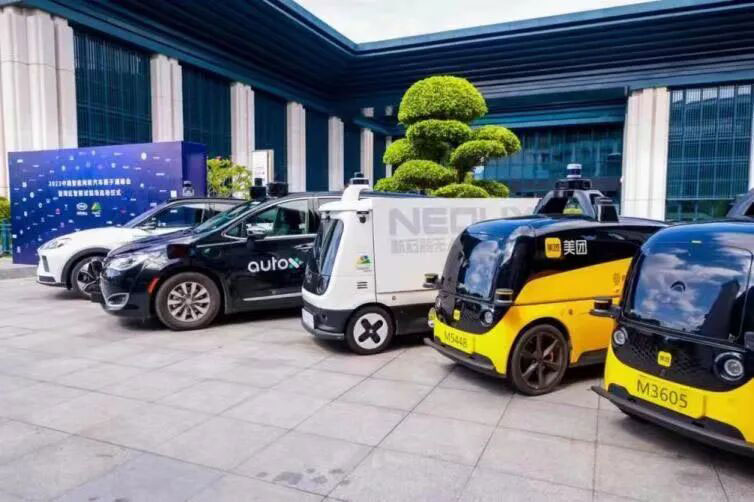
In addition to active safety testing, the proving ground provides a wide range of R&D verification services for companies. Liu Yakun, general manager of Shenzhen Bay Area Intelligent Connectivity Technology Service Co., Ltd., said the automated parking test zone includes parking spaces of different sizes and surface materials, along with various obstruction setups, to help companies continuously refine and upgrade their automated parking technologies. On the long straight track, blowout tests simulate sudden tire failure during normal driving in order to evaluate how well the vehicle maintains stability in emergencies.
Beyond dynamic testing, multiple specialized laboratories at the proving ground’s core testing center are operating simultaneously, covering vehicle performance, battery safety, intelligent driving and more. From full-spectrum performance testing of power batteries, to vehicle center-of-gravity calibration and chassis tuning, to simulation and validation of autonomous driving algorithms, the labs provide end-to-end testing services spanning individual components to complete vehicles. This allows technologies to undergo full-condition verification before mass production, eliminating risks before they reach the assembly line.
(Photo provided to Guangming Online)
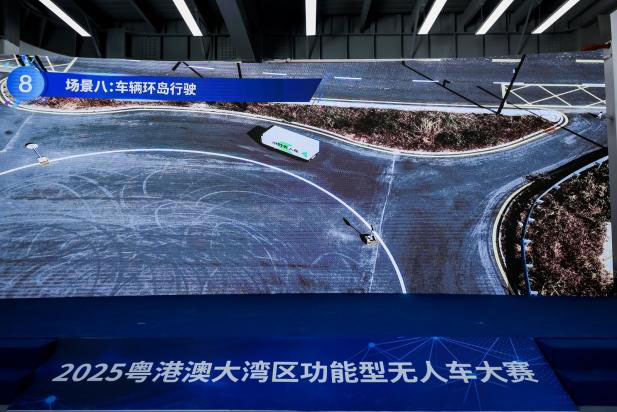
“The center offers standardized, high-precision testing support and has significantly shortened the cycle from R&D to mass production for the intelligent driving systems,” said Zhou Guang, founder of DeepRoute.ai. a resident company at the center for full-vehicle integration and validation, with test data feeding directly back into algorithm iteration and production-line optimization, hence forming an efficient closed loop linking research, testing and manufacturing.
“The city and district governments jointly built the Greater Bay Area Smart-Connected Vehicle Proving Ground to lay the foundation for smart manufacturing,” said Wen Yuansong, head of the smart-connected vehicle division at the Pingshan District Development and Reform Bureau. He added that the district also offers subsidies for testing expenses, with a single company eligible for up to 4 million yuan a year, significantly easing the cost burden of R&D testing.
(Photo provided to Guangming Online)
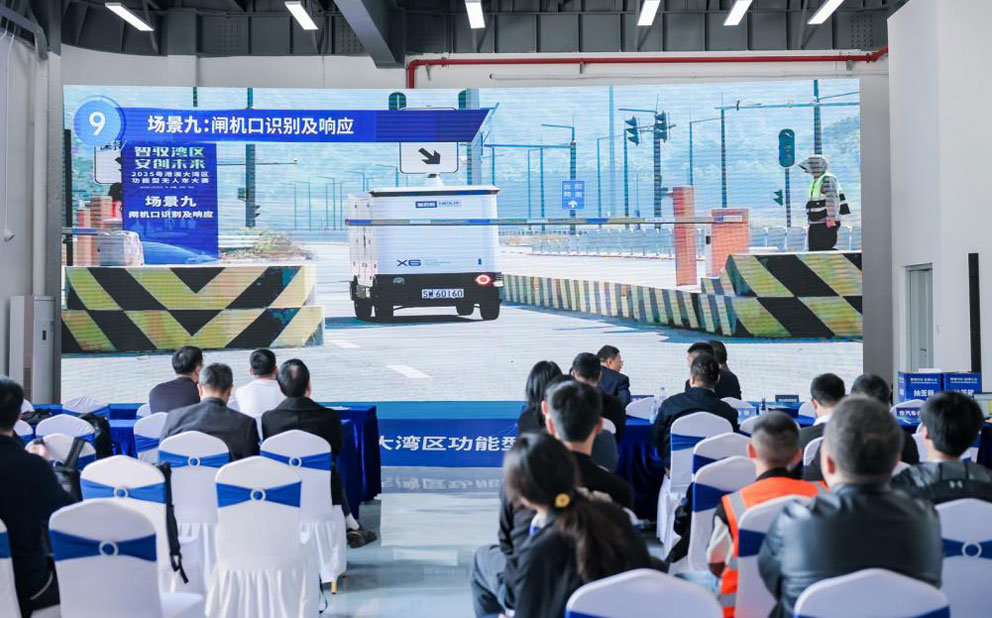
Wen noted that further upstream in the supply chain, Pingshan has also worked with central state-owned enterprises to establish the country’s first standards-based verification platform for automotive-grade chips. “This platform fills a critical gap in pre-installation testing for domestically developed chips, making them truly ready and reliable for use in vehicles,” he said. In his view, simultaneous efforts in facilities, funding and standards have given companies stronger support for R&D, more reliable testing conditions and a more secure supply chain.
Pingshan has now developed an industrial ecosystem with the proving ground at its core, bringing together vehicle manufacturers, intelligent driving system developers and component suppliers in coordinated growth. In 2025, the industrial output of large-scale smart-connected vehicle enterprises in the district reached 119.4 billion yuan, up 23.2 percent year on year, forming a full industrial loop in which testing, manufacturing and supporting services are all based in Pingshan. At the same time, the district has established a municipal-level vehicle-road-cloud integration incubation and operations center, launched Shenzhen’s first new energy vehicle intellectual property innovation consortium, and worked with leading companies to set up 17 joint laboratories, providing comprehensive ecosystem support for smart manufacturing.
(Photo provided to Guangming Online)
As the core area underpinning Shenzhen’s transformation into a world-class automobile city of the next generation, Pingshan is leveraging the Proving Ground as a strategic fulcrum to further strengthen the entire industrial chain—from testing and validation, to technology R&D, to smart manufacturing and supporting services. In doing so, it is accelerating the transition toward higher-end, smarter and greener development, with the aim of becoming a national benchmark for smart manufacturing of vehicles.
By Yan Shenghe, Guangming Daily reporter, and Zhong Huanhuan, Guangming Daily correspondent
点击右上角 微信好友
微信好友
 朋友圈
朋友圈

请使用浏览器分享功能进行分享