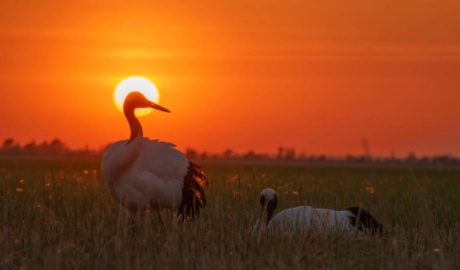


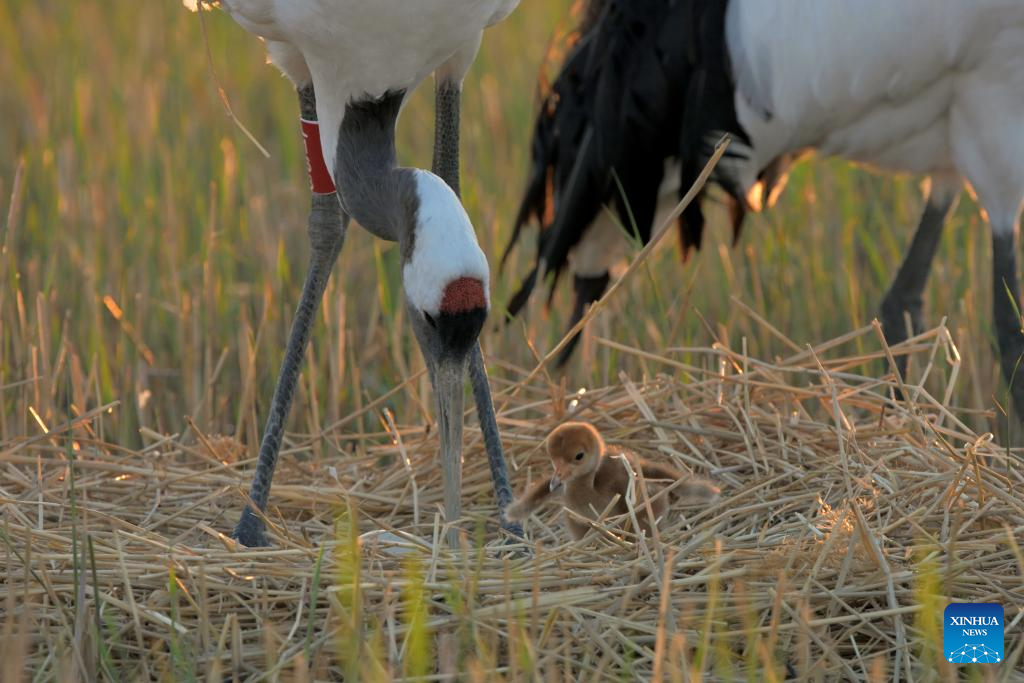
A red-crowned crane guards its chick and egg at Zhalong National Nature Reserve in Qiqihar, northeast China's Heilongjiang Province, May 7, 2024. Zhalong National Nature Reserve has made a detailed plan to ensure an ideal environment as the captive-bred red-crowned cranes there are in their breeding season.
The reserve is dubbed the "home of red-crowned cranes" in China, and serves as the world's largest habitat and reproduction base for wild red-crowned cranes.
To date, more than 380 red-crowned cranes bred in captivity have been released into the wild. (Photo by Wang Yonggang/Xinhua)
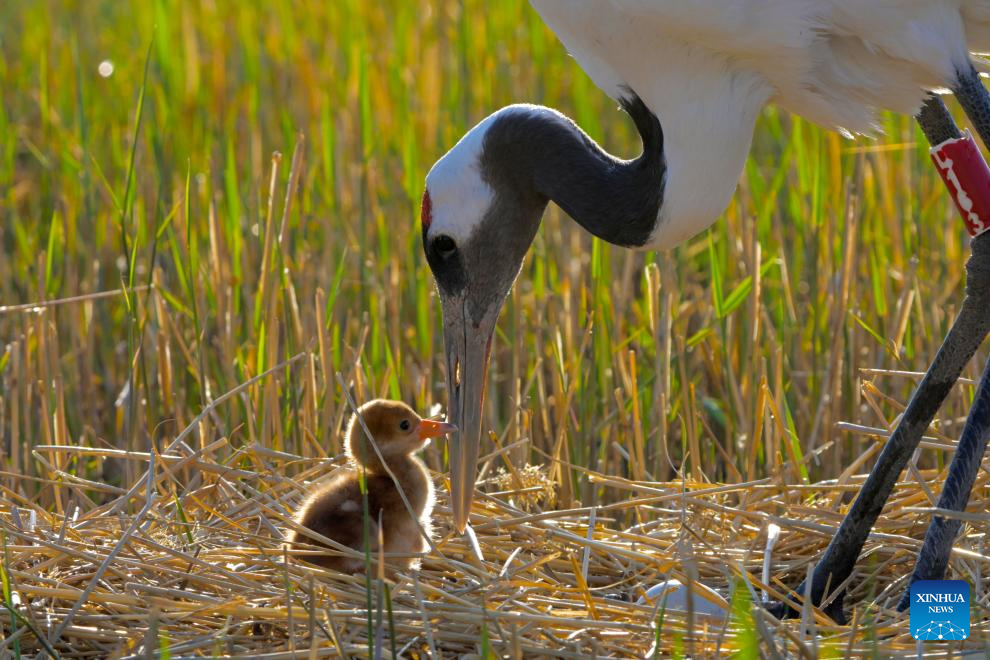
A red-crowned crane guards its chick and egg at Zhalong National Nature Reserve in Qiqihar, northeast China's Heilongjiang Province, May 7, 2024. Zhalong National Nature Reserve has made a detailed plan to ensure an ideal environment as the captive-bred red-crowned cranes there are in their breeding season.
The reserve is dubbed the "home of red-crowned cranes" in China, and serves as the world's largest habitat and reproduction base for wild red-crowned cranes.
To date, more than 380 red-crowned cranes bred in captivity have been released into the wild. (Photo by Wang Yonggang/Xinhua)
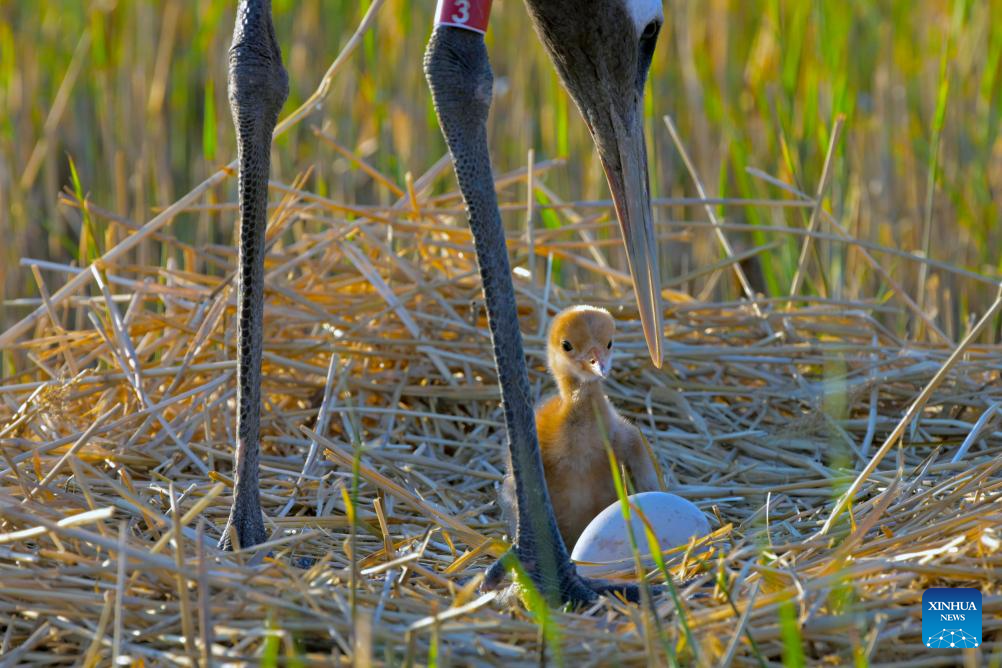
A red-crowned crane guards its chick and egg at Zhalong National Nature Reserve in Qiqihar, northeast China's Heilongjiang Province, May 7, 2024. Zhalong National Nature Reserve has made a detailed plan to ensure an ideal environment as the captive-bred red-crowned cranes there are in their breeding season.
The reserve is dubbed the "home of red-crowned cranes" in China, and serves as the world's largest habitat and reproduction base for wild red-crowned cranes.
To date, more than 380 red-crowned cranes bred in captivity have been released into the wild. (Photo by Wang Yonggang/Xinhua)
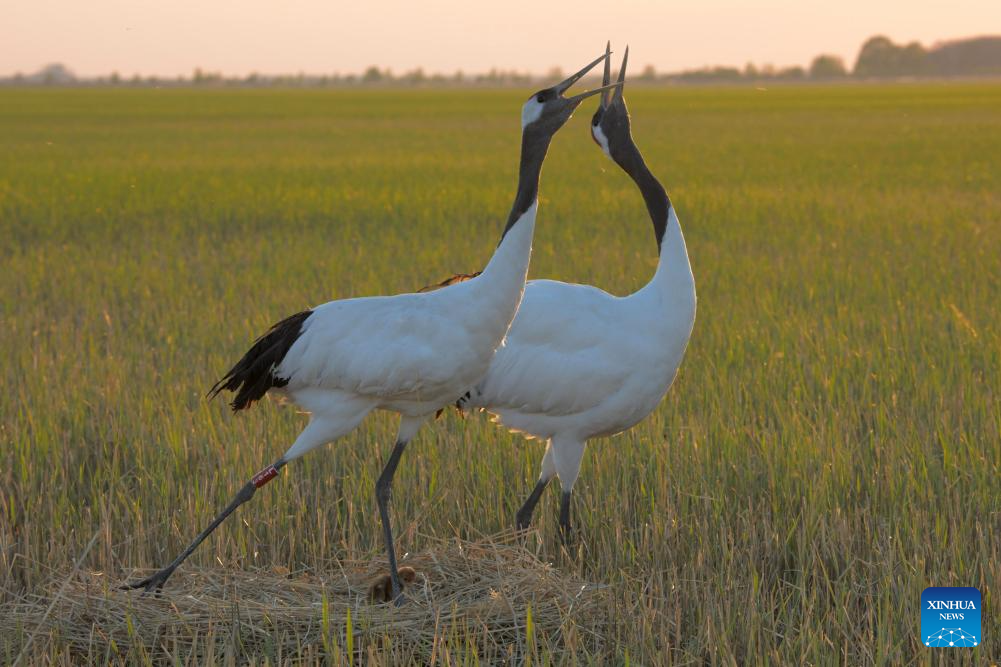
Red-crowned cranes are pictured near their nest at Zhalong National Nature Reserve in Qiqihar, northeast China's Heilongjiang Province, May 7, 2024. Zhalong National Nature Reserve has made a detailed plan to ensure an ideal environment as the captive-bred red-crowned cranes there are in their breeding season.
The reserve is dubbed the "home of red-crowned cranes" in China, and serves as the world's largest habitat and reproduction base for wild red-crowned cranes.
To date, more than 380 red-crowned cranes bred in captivity have been released into the wild. (Photo by Wang Yonggang/Xinhua)
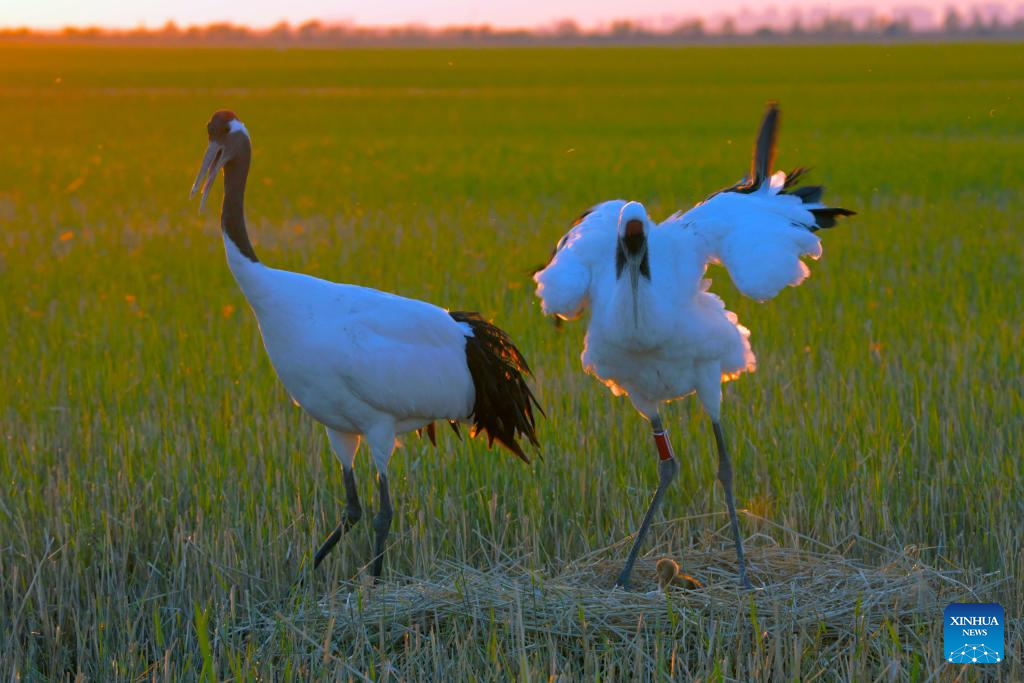
A red-crowned crane family is pictured at Zhalong National Nature Reserve in Qiqihar, northeast China's Heilongjiang Province, May 7, 2024. Zhalong National Nature Reserve has made a detailed plan to ensure an ideal environment as the captive-bred red-crowned cranes there are in their breeding season.
The reserve is dubbed the "home of red-crowned cranes" in China, and serves as the world's largest habitat and reproduction base for wild red-crowned cranes.
To date, more than 380 red-crowned cranes bred in captivity have been released into the wild. (Photo by Wang Yonggang/Xinhua)
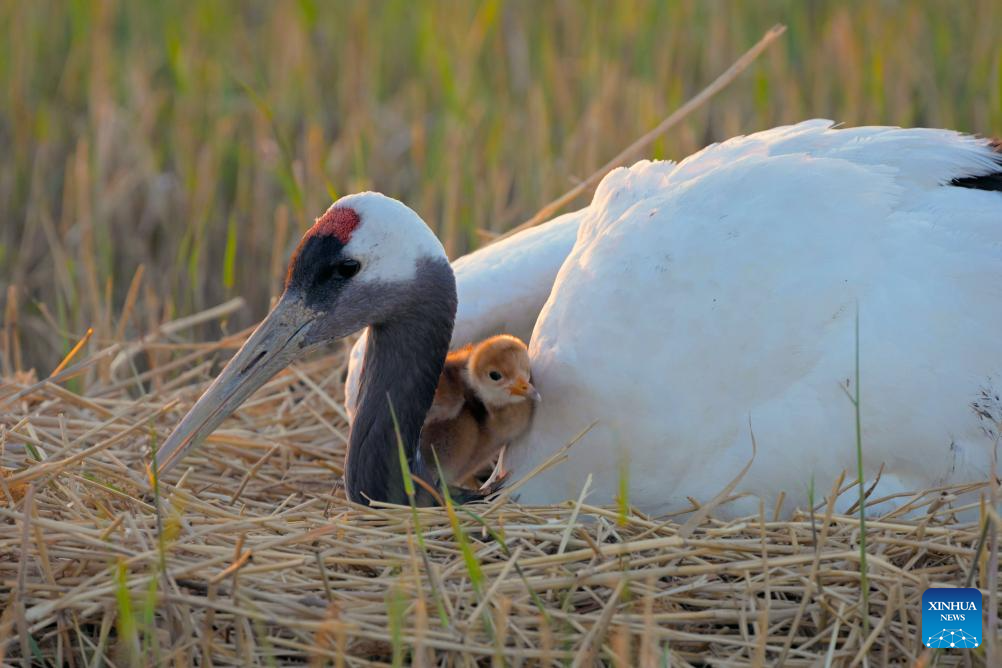
A red-crowned crane chick has fun on its mother's neck at Zhalong National Nature Reserve in Qiqihar, northeast China's Heilongjiang Province, May 7, 2024. Zhalong National Nature Reserve has made a detailed plan to ensure an ideal environment as the captive-bred red-crowned cranes there are in their breeding season.
The reserve is dubbed the "home of red-crowned cranes" in China, and serves as the world's largest habitat and reproduction base for wild red-crowned cranes.
To date, more than 380 red-crowned cranes bred in captivity have been released into the wild. (Photo by Wang Yonggang/Xinhua)
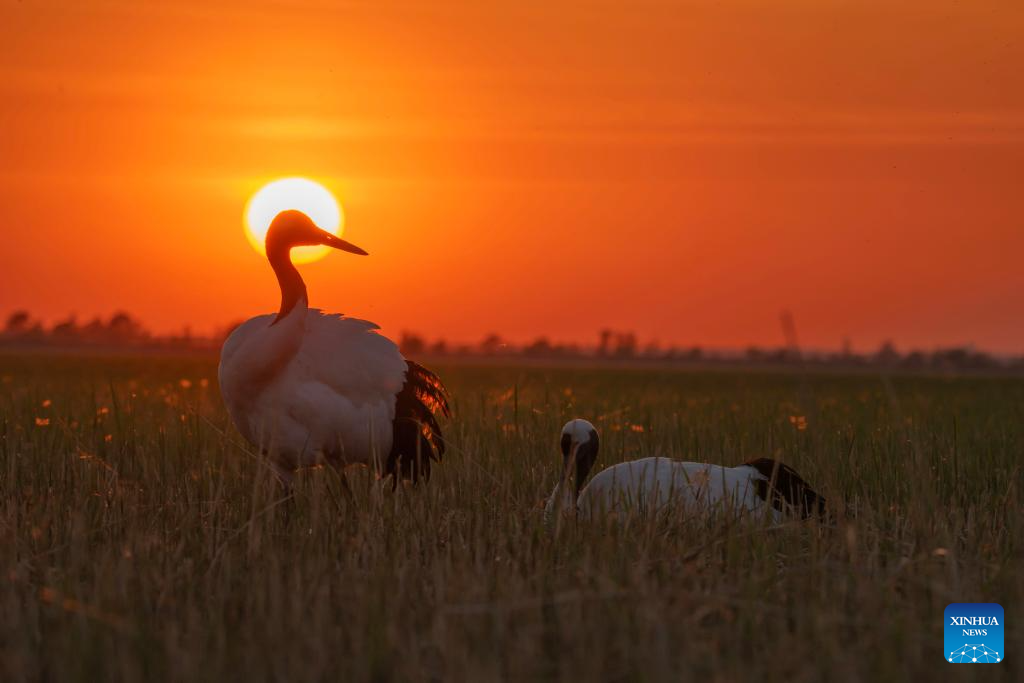
A male red-crowned crane (L) guards his mate as she hatches eggs near their nest at Zhalong National Nature Reserve in Qiqihar, northeast China's Heilongjiang Province, May 7, 2024. Zhalong National Nature Reserve has made a detailed plan to ensure an ideal environment as the captive-bred red-crowned cranes there are in their breeding season.
The reserve is dubbed the "home of red-crowned cranes" in China, and serves as the world's largest habitat and reproduction base for wild red-crowned cranes.
To date, more than 380 red-crowned cranes bred in captivity have been released into the wild. (Photo by Wang Yonggang/Xinhua)
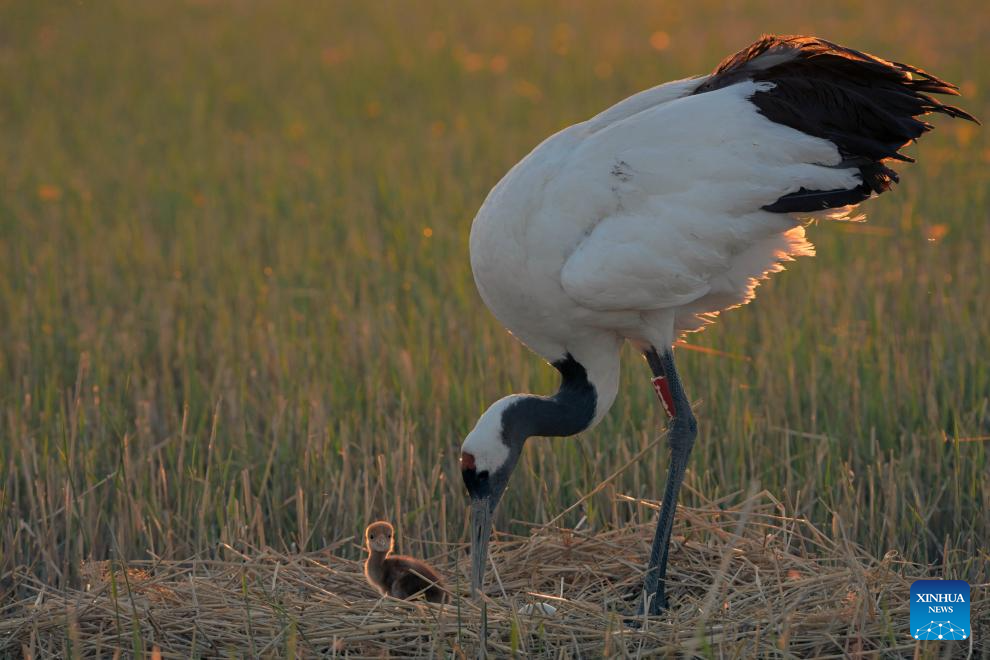
A red-crowned crane guards its chick and egg at Zhalong National Nature Reserve in Qiqihar, northeast China's Heilongjiang Province, May 7, 2024. Zhalong National Nature Reserve has made a detailed plan to ensure an ideal environment as the captive-bred red-crowned cranes there are in their breeding season.
The reserve is dubbed the "home of red-crowned cranes" in China, and serves as the world's largest habitat and reproduction base for wild red-crowned cranes.
To date, more than 380 red-crowned cranes bred in captivity have been released into the wild. (Photo by Wang Yonggang/Xinhua)

Asia-Pacific Community: Chinese Culture Day brings China closer to Australian students

Jingmai Mountain in China's Yunnan draws tourists with tea culture

2026 Int'l Youth Band China Tour (Shenzhen) kicks off in Guangdong

Morning scenery of Wuling Mountain National Nature Reserve in N China's Hebei

Villagers dry agricultural products in Wuyuan County, China's Jiangxi
点击右上角 微信好友
微信好友
 朋友圈
朋友圈

请使用浏览器分享功能进行分享